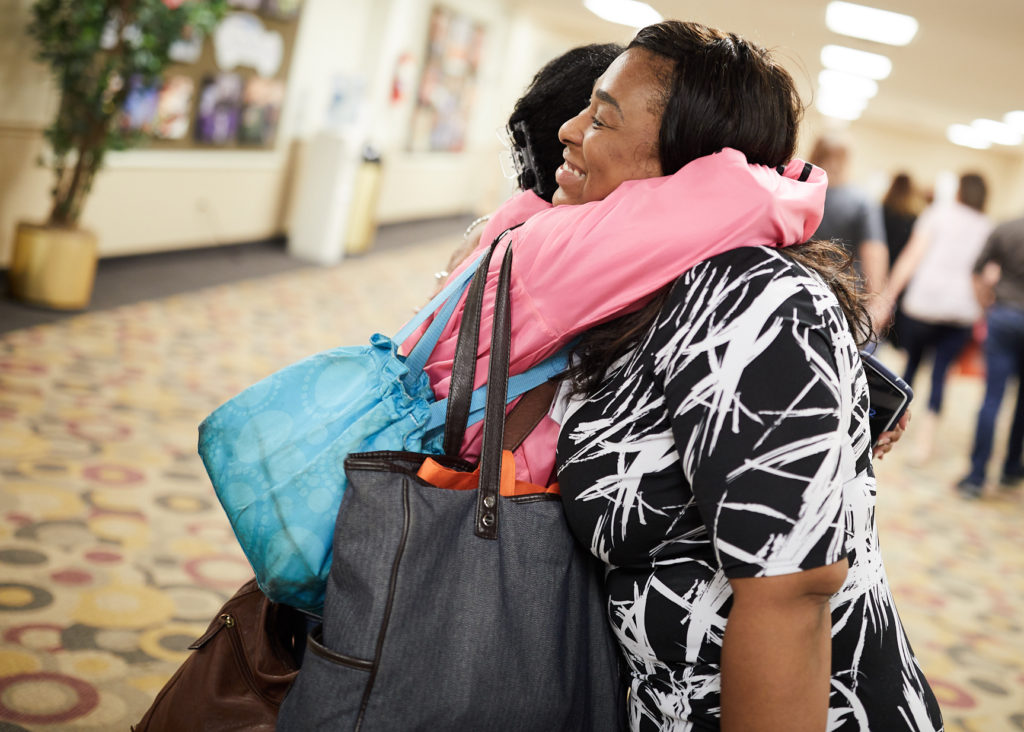
We’re able to do what we do because of you.
Each year, Milestones serves more than 2,400 parents and professionals throughout the region. We strive to support and enrich the local autism community through our annual conference, workshops, trainings, coaching services and referrals, as well as providing thousands of resources on our website, milestones.org. Since our founding in 2003, the mission is simple yet significant: to help individuals with autism reach their potential.
We believe there is a spectrum of possibility within every individual with ASD.
Your generous support has enabled us to become the preeminent autism resource in Northeast Ohio. Families with children on the spectrum come to us for information about an individual’s social, emotional, educational, recreational, therapeutic, vocational and housing needs from birth through adulthood. World-renowned author and speaker Temple Grandin kicked off our 15th Annual Autism Conference, which attracted over 1,500 attendees this year. We expanded our workshops to include such panels as “How ASD Impacts Children of Color and their Families,” “In Love and On the Spectrum” featuring couples where one partner is on the spectrum, and “Working with Individuals with ASD Who Identify as Transgender,” all highlighting the need for more awareness and understanding from social service, medical and other providers of care.
Continue reading →
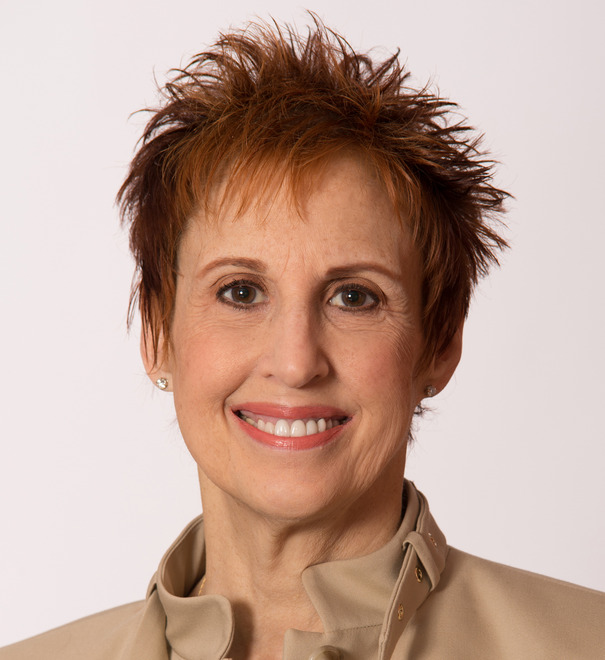
Milestones 2017 Benefit Honoree Rochelle Nyer has devoted three decades of her professional career and personal life serving families with children on the autism spectrum. She traces her involvement with Milestones Autism Resources back to its early years, when she attended the organization’s very first conference in 2003. Impressed with its impact on local families, Rochelle knew she wanted to participate and help make a difference.
“You can’t learn from a textbook as much as you can learn from people who live it every day,” Rochelle says. “That’s why I have such admiration for this organization. They have helped so many people who live it every day.”
Fifteen years after attending that first conference, Rochelle continues to make integral contributions to Milestones, serving on the board, being a part of the planning committee and serving as co-chair of the annual conference.
“Being a part of Milestones has made me so appreciative of what it does to help advocate for children and families,” she says. “I am more than humbled to be a part of and recognized by this great organization.”
Tell us about your involvement with Milestones.
I have been involved with Milestones since I went to the very first conference, 15 years ago. I was so impressed that it was one of the more organized conferences. I said to (co-founder) Ilana that I wanted to be more involved. I helped to distribute posters, I was on the conference planning committee. I remember those early days when we went to (co-founder) Mia’s house – and her kids were sitting on her lap in the living room!
It was an organization that started with very little and has grown exponentially over the years. In the beginning it was just Ilana and Mia, essentially “volunteering” countless hours and making Milestones what it is today – with an exceptional staff that impacts the community in a tremendous way.
Continue reading →
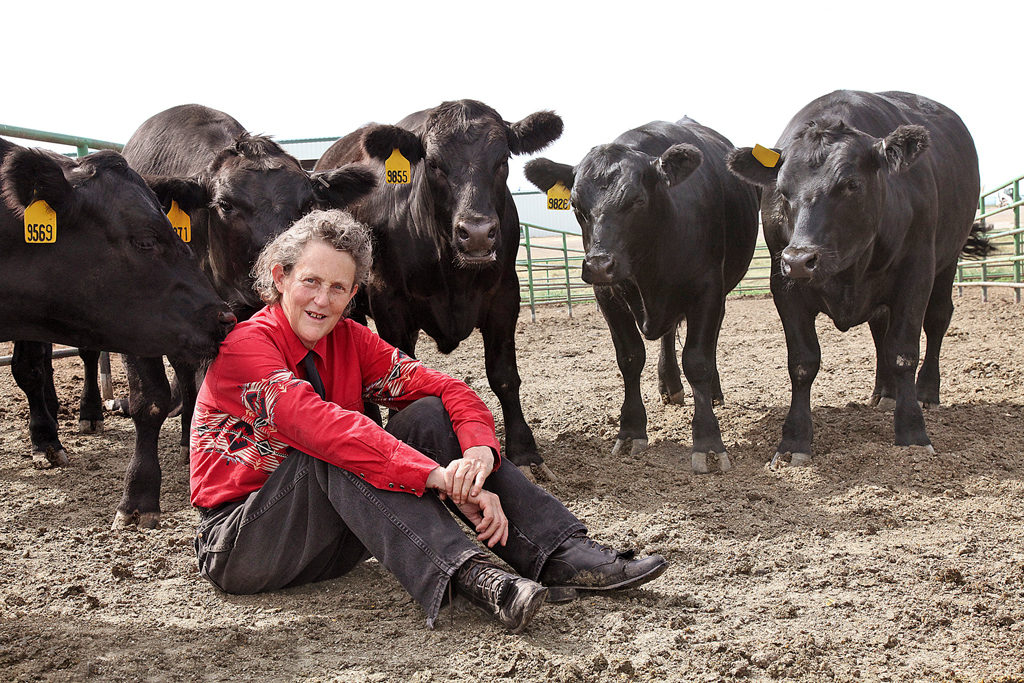
Often we are inclined to hiding the most honest parts of ourselves – but author, animal science professor & autism advocate Temple Grandin is refreshingly unrestrained with sharing hers.
It’s what the 69-year-old scientist, TIME 100 Most Influential People and TED Global Speaker has been doing for more than 40 years. As a high-functioning person with autism, Grandin, who will kick-off our 15th Annual Autism Conference at Playhouse Square on June 14 with A Special Evening with Temple Grandin, has been able to articulate her extraordinary life experiences with exceptional insight.
As someone who “lives in both worlds” – the autistic and the neurotypical – she has spent almost her entire life raising awareness and promoting acceptance of individuals on the autism spectrum. Thanks to Grandin’s efforts, we are breaking down barriers to embrace, and celebrate, neurodiversity.
“Different kinds of minds are good at different kinds of things,” she said during a recent phone interview from Florida, where she was invited to speak to top corporate executives. “That’s why we need all kinds of minds working together to solve problems.”
Grandin is known for taking strong positions on autism and the education of children with autism. She advocates for early intervention, including the training of teachers to direct specific fixations of the child. What’s new on the autism front and what Grandin is currently advocating is helping children transition into adulthood.
“We’ve made much progress in the early intervention part, but now I want to see kids go out and be successful as adults,” she says. “We need to get young people interested in hands-on skills. I’m very concerned about how the schools have taken out these hands-on classes – like home economics and wood shop, auto shop, art and theater and music.”
Kids need job skills training before they go out into the world, Grandin says. Give them a trade so they can enter the workforce and get a job that won’t be replaced by artificial intelligence.
“They are not learning how to work; they need to start as early as middle school,” she recommends. “Volunteer at their church, work in a clothing store or an ice cream shop. Expose them to something they might find an interest in. My goal for young people: get two real summer jobs before graduation.”
Another issue of great concern, says Grandin, is too much screen time.
“Kids today are totally addicted to video games,” she says. “We need to wean them off slowly. And then give them choices. I see too many smart kids getting addicted to video games. They need to get outside. Start working. Get them involved in things. Get them out with other kids.”
Sometimes, part of the problem can lie with parents, she says.
“There are certain parents who are afraid to let go,” Grandin says. “There’s a tendency to do too much for their children. But kids need to be stretched. Not thrown into the deep end of the pool, but stretched and given choices. My mother was always pushing me to do different things. When I was 13 I started working for a seamstress. At 15, I was cleaning horse stalls.”
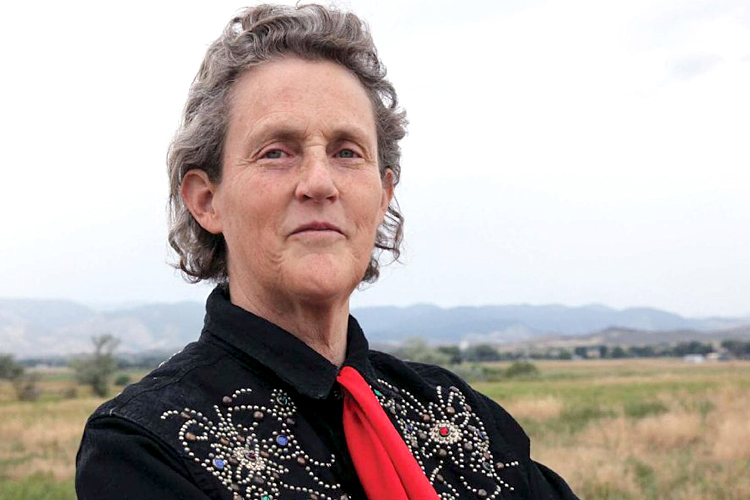
Born on August 29, 1947 in Boston, Massachusetts, Temple Grandin was diagnosed with autism (considered a form of brain damage at the time) at age 2. Grandin’s mother, Eustacia Cutler (the actress, singer and granddaughter of the co-inventor for the autopilot aviation system, John Coleman Purves), worked tirelessly to find the best care and instruction for her daughter. Having the financial means to hire the world’s leading specialists, Eustacia held on to the hope of finding an alternative to institutionalization.
“I can remember the frustration of not being able to talk – I couldn’t get my words out,” Grandin has said about her early childhood. “My speech came in gradually. Words at a time. When I was a little kid I was very autistic. Non-verbal. Screaming. Rocking. That’s the kind of kid they just put away in an institution.”
Grandin’s treatments included extensive speech therapy and an emphasis on turn taking and playing games, which helped to draw out and reinforce her communicative abilities. As a result, she began to speak at the age of 4. “I had good mentors like my mother and my science teacher,” she says. “I’m fortunate to have had supportive mentors from elementary school and onward. It’s why I can’t emphasize enough the importance of young children getting early intervention.”
High school, on the other hand, was a whole other story. “Absolute worst part of my life,” she says. Social interactions remained difficult during adolescence. Peers regularly teased Grandin for her verbal tics like repetitive speech. Having had enough, she once threw a book at a fellow classmate who taunted her, resulting in Grandin’s expulsion from school.
Despite these challenges, she was able to make considerable accomplishments in academia. Grandin received her bachelor’s degree in psychology from Franklin Pierce College in New Hampshire, a master’s degree in animal science from Arizona State University and went on to earn a PhD in animal science from the University of Illinois at Urbana-Champaign. Today, she serves as Professor of Animal Science at Colorado State University.
“People ask me, ‘How did you end up working in the cattle industry?'” she says. “It’s because I was exposed to it as a teenager. When I was 15, I was cleaning horse stalls every single day. I was proud of the fact that I ran a horse barn.”
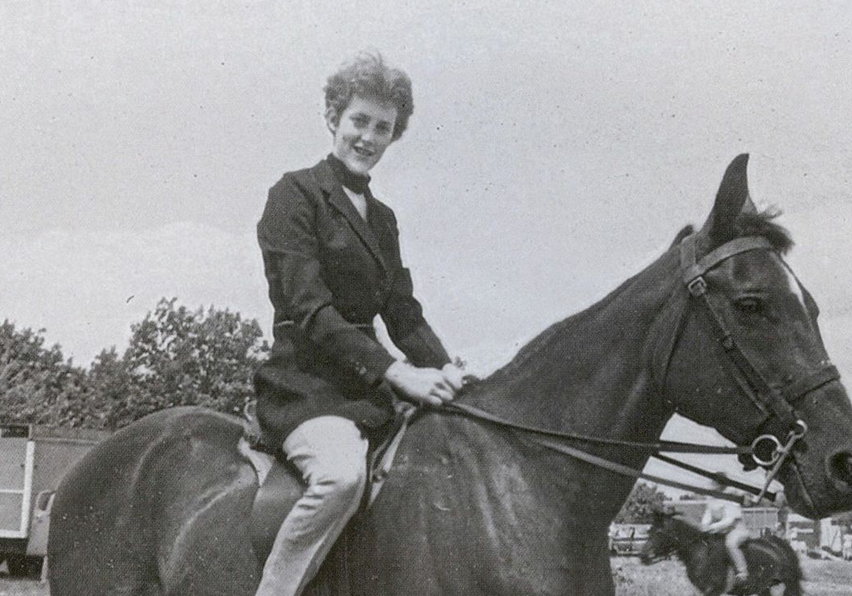
That exposure to horses eventually unlocked a lifelong passion for animals. For more than four decades, Grandin has dedicated her life to animal science and animal welfare. In fact, her extensive research is credited with transforming the beef industry. Over half the cattle in North America are handled in humane livestock systems Grandin created, including the development of a center track conveyor restrainer system for holding cattle. Globally, Grandin’s designs are used by the largest beef producers and processors. She is also the author or co-author of more than 60 peer reviewed scientific papers on a variety of other animal behavior subjects.
In addition to her contributions to animal science, Grandin was one of the first individuals on the spectrum to publicly share insights from her personal experience. She became well-known beyond the autistic community following an appearance in Oliver Sacks’ 1995 book, An Anthropologist on Mars, the title of which is derived from Grandin’s description of how she feels in social settings (including hypersensitivity to noise and an extreme sensitivity to detail and environmental change).
“Read Thinking in Pictures if you want to understand my mind,” Grandin says, referring to her critically-acclaimed 1995 book which explains how autism shapes her daily life. “Everything in my mind works like Google – set for the image function.”
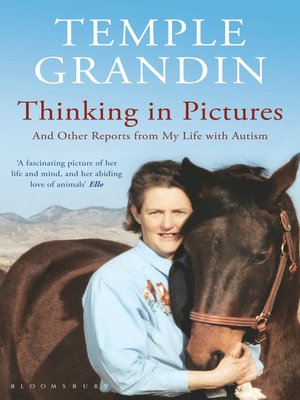
Grandin details three types of minds in her book, The Autistic Brain.
“The Pattern Thinker would be a mathematician, for example,” she says. “The Word Thinker might be the kid who likes history. And then you’ve got Visual Thinkers, like me.”
She credits her visual search engine-type of mind with helping her understand animals and design livestock systems. She compares her memory to full-length movies that play in her head, which she has the ability to replay at will, allowing her to notice small details. Grandin argues that her contributions to the field of animal science would not have been possible without the insights attributed to her autism.
“I get most excited when things that I do work,” Grandin says of her contributions. “Like when a mother of an autistic child tells me her child went to college because of me, or when I see that a meat packing plant has really improved. Or a rancher tells me that one of my systems works really well. When I’m making real change in the real world, that makes me happy.”
[Opening photos: Rosalie Winard]
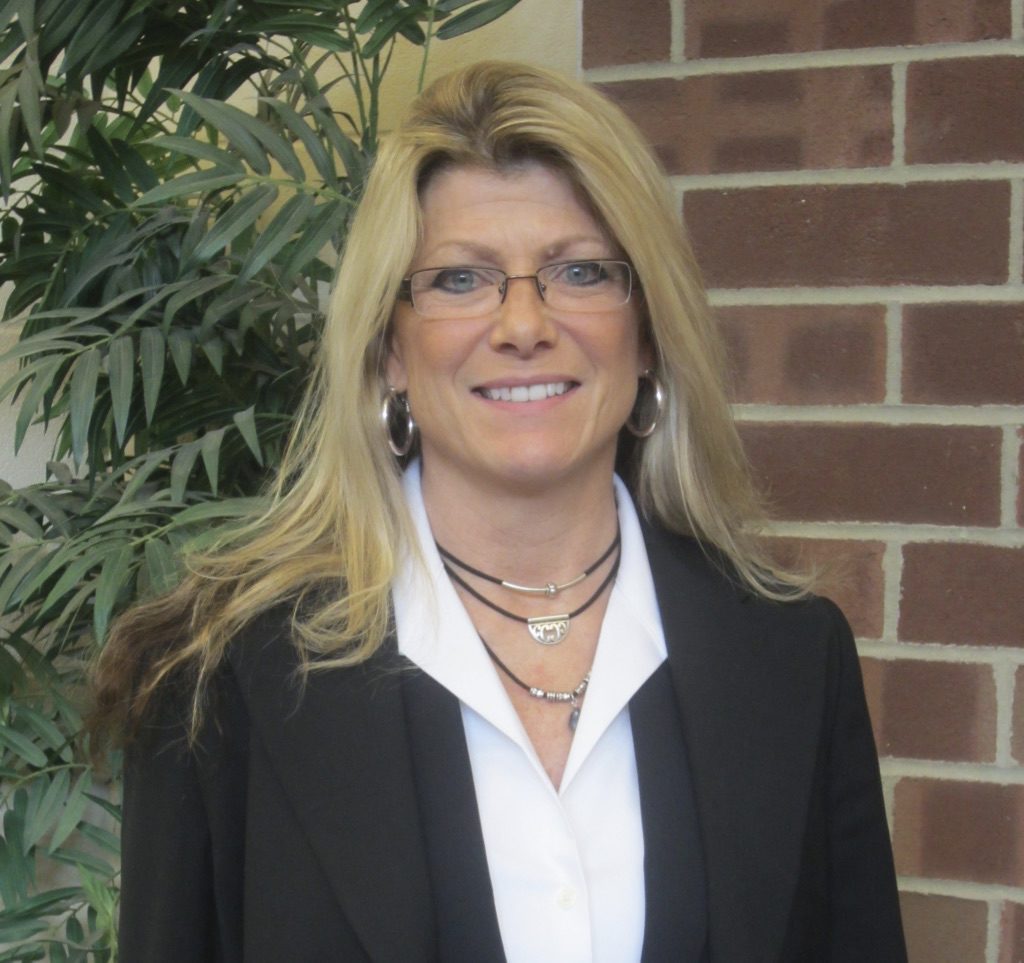
Tabatha Devine, Milestones 2017 honoree of the Outstanding Educator Award, says that working with individuals on the autism spectrum has helped her become a more compassionate, caring and understanding person.
“To make others look past the disability and to see the person, I’ve always thought it was necessary to educate those around the person with special needs,” Tabatha says. She also strives for “more” for her students: more opportunities, more experiences, more adventure. “I always wanted my students to participate in prom, sporting events, graduation, mainstream classes and become competitively employed.”
For the past 15 years, Tabatha has served as a Transition Coordinator for the Westlake City School System, working with students with disabilities. For Tabatha, going above and beyond meant becoming a class advisor so her students could attend prom for the first time. It meant becoming a coach so her students wouldn’t feel intimidated by others and be given a fair chance. She made sure her students attended graduation ceremonies with the rest of the student body while providing all support necessary to make this happen. She approached area businesses to promote her students’ abilities and to help create positions and provide support to individuals who may never have thought to hire a person with special needs.
Prior to working at Westlake City Schools, Tabatha served extensively in the region as an Intervention Specialist, including at St. Vincent St. Mary’s High School in Akron (where she introduced inclusion and helped integrate students with special needs into traditional classrooms); at Coventry High School, also in Akron (where she founded the school’s first classroom for students with developmental disabilities), and at Lakewood High School (where she helped bring special needs students together with mainstream students in a literacy program).
Continue reading →