Ask the Expert
The Social Security Administration (SSA) oversees two disability programs, one of which is Supplemental Security Income (SSI). This program provides monthly benefits to individuals with disabilities who exhibit financial need and meet the medical requirements, then he or she might be approved for disability benefits. If a child is on the spectrum and the disorder limits the child enough that he or she meets the medical qualifications, then you might want to help the child apply for disability benefits from the SSA. A child with autism requires special medical care, has special education needs, and requires therapy, all of which affect the family financially. Disability benefits can help with those extra costs.
Meeting the Medical Criteria
The first step in getting approved for Social Security Disability benefits is meeting the medical criteria that the SSA uses to determine disability. Children, who are younger than 18 years of age, have different criteria to meet than the adults do. The SSA uses the Blue Book, which is a medical guide that has separate listings for children. To meet the listing for children with autism, the child must have delayed social and communication skills for their specific age.
The child’s autism listing is found in the Blue Book under Section 112.10. To be approved for SSI benefits, the child must display:
-a symptom of a communication impairment, which might be difficulty responding to speech or producing normal speech.
-a symptom that shows impaired social interaction, which is the inability or difficulty of connecting with others in non-verbal or verbal ways. Examples include the inability to imitate others or respond to others’ emotions.
-a symptom of restricted and/or repetitive behaviors, which include preoccupation with a single activity, rearranging objects, and the need for a highly structured, unchanging environment to function properly.
Continue reading →
If you ask anyone who works with individuals on the spectrum, or anyone in a social service setting for that matter, why they went into the specific type of work that they did, whether it is a teacher, case manager or job coach, it’s certainly plausible to assume that most, if not all of them, would respond with some form of an answer that identifies a desire to help people. It is perhaps in this primordial thought that the best of intentions presents the potential for unnecessary consequences. Perhaps more often than we should, social service professionals want to get involved, do more, and really try to help those in need. In many instances, the desire to be involved in such ways is more than just helpful, it is crucial to ensure people are being supported in ways that are most appropriate.
However, the real challenges that social service professionals are faced with are almost always rooted in two core constructs. First, they must prudently identify exactly when support is needed, and second, specifically how much of said support is actually needed. If too little support is provided, individuals in need of services are left unserved or underserved. In this scenario, needs go unmet. Yet if too much support is provided, individuals are prevented from experiencing the types of less restrictive and more autonomous environments that afford opportunities for learning and growth. Moreover, they become reliant on a professional to do things for them that they could and should be learning to do for themselves. In the context of employment and job coaching, this type of clarity from a professional can be the determining factor in whether or not an employment opportunity becomes a successful employment outcome.
Continue reading →
The holiday season is just around the corner, and you can feel the excitement in the air! For most of us, the lights, glitter, family gatherings, shopping, and travel are all thrilling this time of year. When you are a parent of a child with an Autism Spectrum Disorder, all of these thrilling experiences can also be a major cause of stress. All of the extra sensory stimulation, as well as the changes in schedule and routine, might become a significant source of anxiety for your child, causing him or her to become overwhelmed. So, in an effort to lower the stress level for you, your child, and the rest of your family, we decided to put together some proactive suggestions that will hopefully help all of you to enjoy this magical time of year.
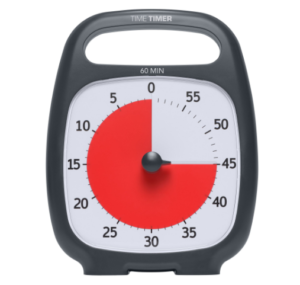 Keep a routine. Since change is difficult for many children with ASD, try to maintain routines and stick to schedules (as much as possible). Use a visual timer (we are fans of the Time-Timer, as children can actually “see” the time passing without any anxiety-causing sound) and give a “First…Then” chart a try!
Prepare, prepare, prepare! Help your child understand what will occur BEFORE it happens with a social story (write your own or choose from those readily available online). Construct a calendar that visually represents when events will occur and refer to it often. If you are hosting (or planning on attending) a large family gathering to celebrate the holiday season, prepare a mini photo album that includes pictures of all those who will be in attendance and their names (review it with your child prior to the event). If you are celebrating locally, it might be helpful to plan a brief visit ahead of time, or plan to arrive before the other guests, to allow your child to become familiar with and comfortable in the environment.
Continue reading →
 It is not uncommon that a diagnosis of autism spectrum disorder (ASD) is accompanied by the presence of another mental health disorder. Most often, a comorbid diagnosis of an anxiety disorder or attention-deficit/hyperactivity disorder (ADHD) is present. Signs/symptoms of anxiety that may be displayed include: worried thoughts about performance, social interactions, and/or situation-specific concerns or fears. Hallmark features of ADHD include: difficulty sustaining attention, staying on-task and seated, and waiting one’s turn.
Research-supported interventions for the treatment of anxiety disorders include behavioral therapy and cognitive-behavioral therapy (CBT). Behavioral therapy may be chosen over CBT when the child is young, autism severity is greater, or the nature of the anxiety is fear-based or situationally-based in which exposure to the feared situation (for example: weather, toilets, or public speaking) is the most effective intervention. Behavioral intervention also may be favored over CBT due to challenges with perspective-taking that may interfere with being able to identify errors in thinking and challenging distorted thoughts.
Continue reading →
 Anxiety, Autism, and Interventions: Playing to One’s Strengths and Supports
Anxiety can be a part of daily life for many individuals with autism. Rates of clinically significant comorbid anxiety in autism have varied widely, with some estimates as high as 40%. Regardless of verbal abilities, cognitive abilities, or developmental level, signs of anxiety present similarly. Stress reactions termed “Fight, Flight, or Freeze” are common. “Fight” can look like irritability, meltdowns, explosions, aggression, or yelling. “Flight” can look like leaving a situation, eloping, or refusing to go to a stressful environment. “Freeze” can look like non-responding, putting one’s head down, or ignoring others. All of these are signs of high anxiety. Cognitive Behavioral Therapy (CBT) is one of the most effective therapeutic techniques to reduce anxiety. However, CBT can be a verbal-heavy, somewhat abstract intervention. It is important to identify your child’s learning strengths and weaknesses, then adapt the CBT techniques to fit your child.
Know triggers (and make sure your child and those involved with your child know them too!) – For a week, document when your child demonstrates anxiety symptoms, what happened before and during, what you and your child each did. Look for patterns and minimize anxiety triggers. Ideally, work with your child and their therapist to make a plan to overcome the anxiety associated with that trigger. For example, if your child is anxious in social situations and large groups are a trigger, work with a therapist to build a plan to engage in increasingly social situations while practicing coping skills. Diffusing a trigger is empowering and helps build confidence to take on other anxiety triggers.
Continue reading →
← Older posts
« Older Entries