Blog
 Ron Sandison interviews Dr. Paula Kluth, consultant, author, advocate and independent consultant
What inspired you to study special education in college?
My high school started welcoming students with more complex needs when I was a senior. I approached the teacher to volunteer and work in her classroom and I made my first friends with disabilities. These friends and that teacher really encouraged me to pursue teaching as a profession.
How did you begin working with students who have autism and other disabilities?
Well, my degree was in special education in significant disabilities, but I started working in an inclusive school right away so I taught students with and without disabilities from my first days as a teacher. The child who really taught me the most that year was a little six-year-old named Jay. He had very few reliable ways to communicate, but he was very smart, energetic, and curious. He really got me “hooked” on learning more about autism (which I knew very little about at the time).
Continue reading →
Recent body cam footage out of Denton, Texas, has shown a 10-year-old boy with autism being held to the ground by his neck, handcuffed, and dragged by a school resource officer. What can be seen in this video is unacceptable. Equally troubling is the recognition by the child and officer that this was not the first time it occurred, rather it appears to be an ongoing, deeply distressing strategy.
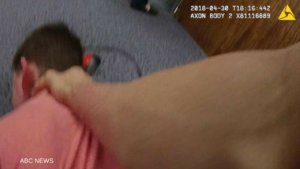
With 1 in 59 children being diagnosed with autism, educators, school officials and first responders must be equipped with the appropriate strategies to support this population and their unique communication challenges. School staff have a responsibility to educate themselves and, if needed, to seek community partners to assist them in serving their students with autism.
As a community, we must work together to prevent such trauma from happening to another child. By providing effective education to the professionals we trust our children with every day, we can improve the outcomes for individuals with autism and help them reach their own unique potential.
Milestones encourages those who serve the autism community to contact their local autism organization to get connected with training in their area. For links to helpful resources, please visit the Milestones Resource Center.
-Ilana Hoffer Skoff, Executive Director
Milestones Autism Resources
This piece was originally published as a Letter to the Editor on cleveland.com.
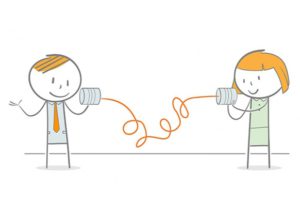 How can one practice better face-to-face communication?
In today’s world of communication technologies, that question is something we should all be asking ourselves, whether we are on the autism spectrum or not. As the world continues to grow more connected electronically, strong communication skills are easy to forget about, yet are still essential for success.
Having assisted many clients with varying degrees of communication skills, education consultant and self-advocate Dr. William Lane knows firsthand that it is necessary for us to be aware of how we practice daily communication, especially in such a technology-saturated world. Below, Dr. Lane shares a few strategies he uses himself, and with other individuals on the spectrum, to improve face-to-face interactions in an era of convenient technology:
The first step is wanting to listen to what the speaker was saying. When wanting to listen, you pay close attention to what the speaker is saying; not only with your mind but also with your facial expressions and body language. When someone is speaking, it is necessary that you provide the speaker with clues of your interest in continuing the conversation. A few examples of facial and body language that are conducive to promoting future conversation are good posture, leaning forward, arms and legs uncrossed, smiling, and having your head up.
Continue reading →
 While reading the article “How to Meet Autistic People Halfway” from the New York Times, I was impressed by how accurate its portrayal of the social issues autistic people have was, as I have faced many of them myself. I have found it hard to make friends, and though I’m happy with my small circle of friends now, it is harder for others to accept that I only have a few really good friends. My mother reminded me recently that I used to take a book out on the playground and read. It bothered her more than it bothered me. I was teased, and my theory at the time was I’m better off alone, then I won’t get upset.
One of the things that really struck me about the article is that they discuss eye contact, and how hard it is for many autistic people.
“Take eye contact. Some autistic people say they find sustained eye contact uncomfortable or even painful. Others report that it’s hard to concentrate on what someone is saying while simultaneously looking at them. In other words, not looking someone in the eye may indicate that an autistic person is trying very hard to participate in the conversation at hand. Unfortunately, this attempt to engage often gets interpreted as a lack of interest.”
This is something I’ve really struggled with, and have worked hard on. It still is difficult for me at times, especially when I’m upset or angry. I’m lucky that most times when I have issues regarding eye contact, I manage to explain it, and am dealing with people who understand me.
Continue reading →
 By the age of 2, my sons were not speaking words and sentences the way other children in their preschool groups were. They each showed precocious signs of their intellectual development, such as my older son drawing and diagramming out “The Very Hungry Caterpillar” book, including writing out words like “egg,” “cocoon,” and “caterpillar.” In fact, the first time he did it at preschool I thought the teacher was joking until she showed me and my son did it in front of me. However, he only spoke a handful of words for his age, so we had him assessed and indeed he needed and benefited from speech therapy. By the age of 4 both of my sons were speaking so well my husband and I joked that it that it seemed hard to believe we were so worried about their speech.
In our case, one son has autism, while the other had speech delays that were resolved with speech therapy. The son with autism was having social communication and sensory issues that my other son did not.
I will always remember sitting at the small table with my son’s kindergarten teacher in his classroom, knees knocking, heart beating, as she gently discussed the concerns she had about my son. She handled the moment so sensitively when she suggested I have him evaluated. I didn’t know much about autism beyond inaccurate stereotypes in movies. What could it mean for my child and his future?
Continue reading →
← Older posts Newer posts →
« Older EntriesNewer Entries »