Blog
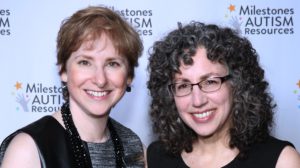 As many families prepare for the Jewish High Holidays, it is important to consider ways to help your child with special needs have the best experience during the festivities. Milestones co-founders and parents Ilana Hoffer Skoff and Mia Buchwald Gelles are prepping for this hectic time of year themselves, and put together a quick list of tips to help you as you get ready for the upcoming holidays.
Familiarize your child with the holiday traditions – Specific music, phrases and foods help define each holiday. Begin introducing these to your child ahead of time so they become familiar with what to expect. Consider using one of the many recordings, YouTube videos, or wonderful children’s books about Rosh Hashanah, Yom Kippur and Sukkot to preview the holiday celebration. For example, if your child is sensitive to loud noises, prepare your child by listening to a video of the shofar (ram’s horn) in advance. The whole month leading up to Rosh Hashanah, synagogues around the community are blowing shofar at the end of their morning service and this is a nice opportunity for them to hear the shofar, in a much smaller setting, and be prepared for it.
Continue reading →
Wandering and elopement behaviors can pose unique safety risks for children and adults on the autism spectrum. Luckily, there are many accessible tools to help keep these individuals safe. Below, Milestones Program Director Beth Thompson highlights some great tips and resources to utilize if your loved one is one of the many individuals with ASD who are prone to wandering.
 Take advantage of free resources – The National Autism Association is currently accepting applications for their very popular, free Big Red Safety Box – the box includes 2 GE wireless door or window alarms with batteries, a Medicalert pendant, bracket or shoe tag, safety alert window clings for homes and cars and much more.
Our very own Northeast Ohio Connecting for Kids also has wandering safety kits for local families. There is no cost for their kit and families can be connected with parents near them that may be dealing with the same elopement issues.
Contact your local County Board of Developmental Disabilities (CBDD) – If your student, child or client is struggling with behaviors that may pose safety risks for them it’s important you notify the County Board of Developmental Disabilities that the individual is connected to. County Boards of DD can sometimes assist in schools, homes and in the community to develop behavioral plans that will help your loved one stay safe.
Continue reading →
Driving is a huge factor of every-day life: we drive to shop, to get to work or school, to visit loved ones, and to access healthcare, among many other things. Now imagine if you were unable to rely on this mode of transportation. This is the reality for many individuals with autism transitioning into adulthood who are uninterested or unable to drive.
Learning to use other methods of transportation independently is a valuable skill for these individuals and can completely change the way in which they engage in and interact with their surrounding community (especially in a city like Cleveland, where public transportation is affordable).
The Cuyahoga County Board of Development Disabilities’ (CCBDD) Travel Training Program is available for individuals and families eligible for CCBDD services who are looking to develop the skills needed to safely navigate their community. The program provides on-foot, bus, UBER/Lyft and bike training, incorporating an initial assessment of every individual’s skills to see how to proceed with their individualized program.
“Within this thorough assessment, we are evaluating everything from how far an individual can walk without fatigue to number and landmark recognition, to phone skills, pedestrian safety, and stranger awareness,” said Community Travel Program Supervisor Mary Lombardo. “We also evaluate their street-crossing skills, knowledge of emergency procedures, and much more.”
Continue reading →
 Recent studies indicate that adults with autism spectrum disorder (ASD) have significantly higher risk of developing a substance use diagnosis (SUD) than the general population (Butwicka, et al, 2017). With its sensory complications, social deficits, rigid behaviors and rule-following, autism was thought to offer protection for developing a SUD. However, in the 2008 book, Asperger Syndrome and Alcohol: Drinking to Cope? the authors Tinsley and Hendricks suggest that being undiagnosed or misdiagnosed might lead someone with ASD to use alcohol or drugs to self-medicate. Though this is true for some, addiction is prevalent among a generation that was diagnosed young, offered early interventions and mainstreamed.
Integrating children with autism into mainstream classrooms can raise expectations that students with ASD will seamlessly blend in and adapt to public schools, colleges and typical work settings. Socializing after school or work, managing stress, meeting deadlines and fitting in are examples of the many challenges adolescents and adults with autism face. People with an autism spectrum diagnosis are experimenting and finding relief.
Continue reading →
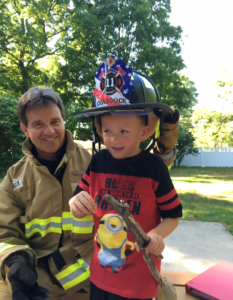 Jenna Newman of Mentor knew that if her young son with autism ever needed help or had an emergency, the Mentor Fire Department would be the first ones contacted. Concerned that first responders may not know how to interact with her son and children like him, Newman teamed up with the Mentor Fire Department to start a free fire safety story-time for kids with special needs. The program was designed to build relationships between local children and firefighters by including shared experiences, such as story-time, a joint activity, and a trip to the parking lot for a tour by the firefighters of firetrucks.
“My son went from not wanting to do anything with any of it, to now sitting by the firemen, high-fiving them, listening to the story and doing the activities; he is really loving the program!” said Newman. “He has made some awesome friends with these heroes.”
The fire safety story-time program was such a success that the nearby Willoughby Fire Department contacted Newman to get the program started at their station as well. However, Newman’s efforts of helping the fire departments didn’t end there. The mother of four also helped to provide new icon cards to the fire departments. These small cards, which include icons of things such as people and body parts, can be used by first responders to engage with individuals with communication needs, and they are now on each truck at both the Mentor and Willoughby fire departments.
Continue reading →
← Older posts Newer posts →
« Older EntriesNewer Entries »