asd
Q: What are the most common types of medications used to treat autism? How do I know which one is the right fit for my child?
A: Currently, there are no medications which treat underlying causes of autism. Rather, medications are used to target symptoms commonly occurring in autistic individuals such as irritability, aggression, distractibility, hyperactivity, impulsivity, anxiety, mood fluctuations, depression or sleep problems.

Dopaminergic antagonists, risperidone (Risperdal) and aripiprazole (Abilify) are used to treat aggression and irritability. ADHD symptoms (distractibility, hyperactivity and impulsivity) are treated with stimulants methylphenidates (Concerta, Focalin, Metadate, Ritalin, Quillivant and others) or amphetamines (Adderall, Vyvanse and others), atomoxetine (Strattera) or alpha-agonists (guanfacine and clonidine). Anxiety may be treated by SSRI’s such as fluoxetine (Prozac), sertraline (Zoloft) or the non-benzodiazepine anxiolytic, buspirone. Depression, mood irritability or OCD may be benefited by SSRI’s, sleep problems by melatonin, diphenhydramine (Benadryl) or clonidine; and, tics by guanfacine, clonidine or dopaminergic blockers. No medications have been shown to treat stimming or repetitive autistic behaviors (as opposed to repetitive behaviors driven by OCD which may respond to treatment with an SSRI).
Typically, one identifies symptoms which may benefit from medication, prioritizes them and selects a medication to target that symptom. The prescriber takes into account a variety Inflatable Church For Sale of factors including secondary symptoms, behaviors, other individual characteristics and responses to prior medications. For example, it may be acceptable for an obese child to have the side effect of decreased appetite while this may not be acceptable for an individual who is already having difficulty gaining adequate weight. An individual with ADHD and anxiety tendencies may have exacerbation of anxiety from stimulant medication and lessening of anxiety when his ADHD is treated with atomoxetine. One also considers practical issues such as cost and whether the child will more readily tolerate a pill which must be swallowed whole, a chewable or liquid medication?
Which medication is right for your child is determined by a process of educated trial and observation since any individual’s therapeutic response and acceptable side effect profile may be unique. All medications may have adverse effects though, happily, the overwhelming majority of side effects are not dangerous or irreversible if prescribed and monitored appropriately. Unfortunately, people on the autism spectrum are frequently more prone to side effects. A cardinal rule in dosing medications for people with autism is, “start low and go slow.” Regular communication between the parents, teachers and prescribing physician or nurse is key to finding a medication and dose which works for your child.
It is important to remember that optimal interventions for individuals with autism are multi-modal. That is, a combination of behavioral, educational, recreational, social, language, medical and others. When medication is warranted, parents and practitioner need to remember it is highly unlikely that finding the “perfect dose” of “just the right medicine” will be the entire solution they are looking for. If the parent’s and/or doctor’s perspective is so narrow that the only questions being considered are, “Is this the right medicine?” “Is this the right dose?” “This medication has helped his attention. Now, which medicine do we need to help his anxiety?” the child will not make the gains one would hope for.
For a good resource on autism and medication, refer to the recently-released Autism Spectrum Disorder: Parents’ Medication Guide published by the American Academy of Child & Pediatric Psychiatry. Click here to read the full document.
— Dr. Steven Wexberg

Dr. Steven Wexberg is a board certified pediatrician who is on staff at the Cleveland Clinic Pediatric Institute. He received his medical degree from Case Western Reserve University School of Medicine and has been in practice for more than 30 years.
[Opening photo: Jamiesrabbits]
Our team is currently spending time on Capitol Hill representing Northeast Ohio, connecting with the national #ASD community & making our voices heard. We’re even lucky enough to spend time in private meetings today with staff from both Senator Rob Portman and Senator Sherrod Brown‘s offices!
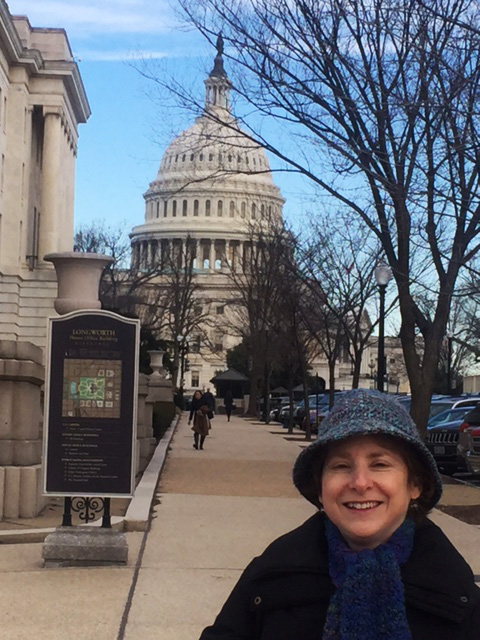 So far the major takeaways from today have been that, together, we should work to mobilize, educate and talk to as many people as possible in order to foster community and affect change. It’s incredibly important to engage family, friends and neighbors to share your unique experiences and drive understanding.
“What happens on the local level can inform Inflatable Church For Sale policy,” says Katy Neas, Easter Seals’ Executive Vice President for Public Affairs. We couldn’t agree more!
In that spirit, we encourage you to tell your story and connect with us in social media using the hashtag #MyMilestones. We look forward to a 2017 of working together to build the future we want to see for our families, community and ourselves.
Every child is their own person – complete with specific ways of relating to the world. For families that have multiple children with ASD, navigating this journey can be much like a puzzle. What works for one child, does not always help others to thrive. This is a common challenge – one that comes often with a sense of much frustration for parents – that we aim to support through our work at Milestones.

In 2005 we met Debra Greene. Debra has two sons on the autism spectrum with very different needs. That year, she received information about Milestones through an intervention specialist of one of her boys. She attended the annual conference where she recalls being “exceedingly impressed, especially with the wide array of relevant workshop offerings.” Debra was encouraged, knowing that she had found an organization that could help her.
In search of more information, Debra attended her second conference the following year and soon after began volunteering at the Milestones office. She wanted to share the support that she had received with other families in need, having experienced the benefit of being a part of the Milestones community. Inflatable Church For Sale “Milestones was, and has been a valuable resource during difficult seasons of care-giving for a loved one with Autism,” says Debra. “Their efforts helped me and my family tremendously. I wanted the opportunity to give back by helping others who were going through what I went through.”
Over time, the Greene family was able to see the benefit of engaging with Milestones in various ways: “The Milestones Website has been a wonderful resource for me, providing many tools I’ve used with my sons Aaron and Matthew.”
Milestones has assisted the Greene family in many other ways, including:
– Providing a platform for Debra’s son, Nick, to participate in a conference workshop for siblings of children with autism.
– Helping to construct a plan for Matthew to transition from high school to adult agency placement. Specifically, Beth Thompson’s attendance at IEP meetings and assistance in sorting through the data collected from 5 different agency tours. “Also,” says Debra, “Beth and Haley [Dunn] met with Matt’s dad and I, helping us to outline our short and long-term goals for Matthew.”
– Awarding Aaron an unpaid summer internship which increased his social and employment skills, helped him come out of his shell, allowed him to learn to follow directions and multi-task – all in a safe and nurturing environment.
– Allowing Aaron, a gifted musician, to play his keyboard at Milestones events where he has developed his performance skills and become more self-confident. With additional staff support, Aaron has played piano at other venues in the Cleveland area, to which the staff has periodically provided on-site aide support.
Debra continues: “The collaboration Milestones has with other agencies including John Carroll University and Jewish Family Services have also been wonderful for our family. They have provided the opportunity for our children to be involved with other young adults and become more social.”
Debra now serves on the Milestones Board of Trustees. “I love my board involvement with Milestones and I’ve learned so much. I am constantly impressed by the people serving on the Board who so passionately give of their time and talents – even if they have no direct connection to someone with autism.” She is also involved on the committee which helps plan the Milestones annual conference by providing ideas for topics that are relevant to parents whose children have autism.
Newer posts →
Newer Entries »