


Part 9: Using Rewards
Punishment involves taking away something that the child wants or imposing something that the child doesn’t want in response to the occurrence of the “wrong” behavior (such as wetting pants). In either case, punishment does not support creating a positive experience that promotes success. When your child has an accident, be matter of fact and calm. You can say “You are wet. You need to use the potty.” Lead your child to the bathroom and have him sit on the toilet after removing the wet clothing. Then praise your child for sitting on the potty and complete the remainder of the toileting sequence on the visual schedule.
Using rewards to encourage desired behavior is more effective than punishing undesired behavior. Recognizing and rewarding expected behavior can be very motivating to your child. A reward can be something as simple as a smile or saying “well done”. Other rewards can be a preferred food or activity. All rewards should be used to encourage and motivate the child to engage in the desired behavior.
To set up a toileting reward system, develop a list of items and activities that are highly motivating to your child. Next, choose those that you will only use for toilet trip rewards. Avoid using these rewards for other behaviors and events throughout the child’s day. Be sure to inform others of the rewards that you have identified for toileting only so that they too can be consistent and supportive.
Click here for examples of some reward charts; there are many other free printable samples available online.
When using rewards, remember:
- Be clear and consistent, telling your child and others involved the behavior(s) being rewarded and what the rewards are. For one child, you may reward simply sitting on the toilet while another may earn a reward for actually urinating in the toilet.
- Choose rewards that are simple and achievable. Make sure your child is able to actually earn the reward. If necessary break the sequence into smaller steps to ensure success.
- Choose rewards that are affordable and doable. You’ll want to be able to reward the expected behavior every time as your are teaching this new skill.
- Rewards for some children should be immediate; another child may be able to wait and build up to a larger reward. And, you may have to reward your child every step of the sequence if waiting until the end of the sequence for a reward is not meaningful and motivating.
For additional information on the use of reward systems, refer to ERIC (Education and Resources for Improving Childhood Continence).
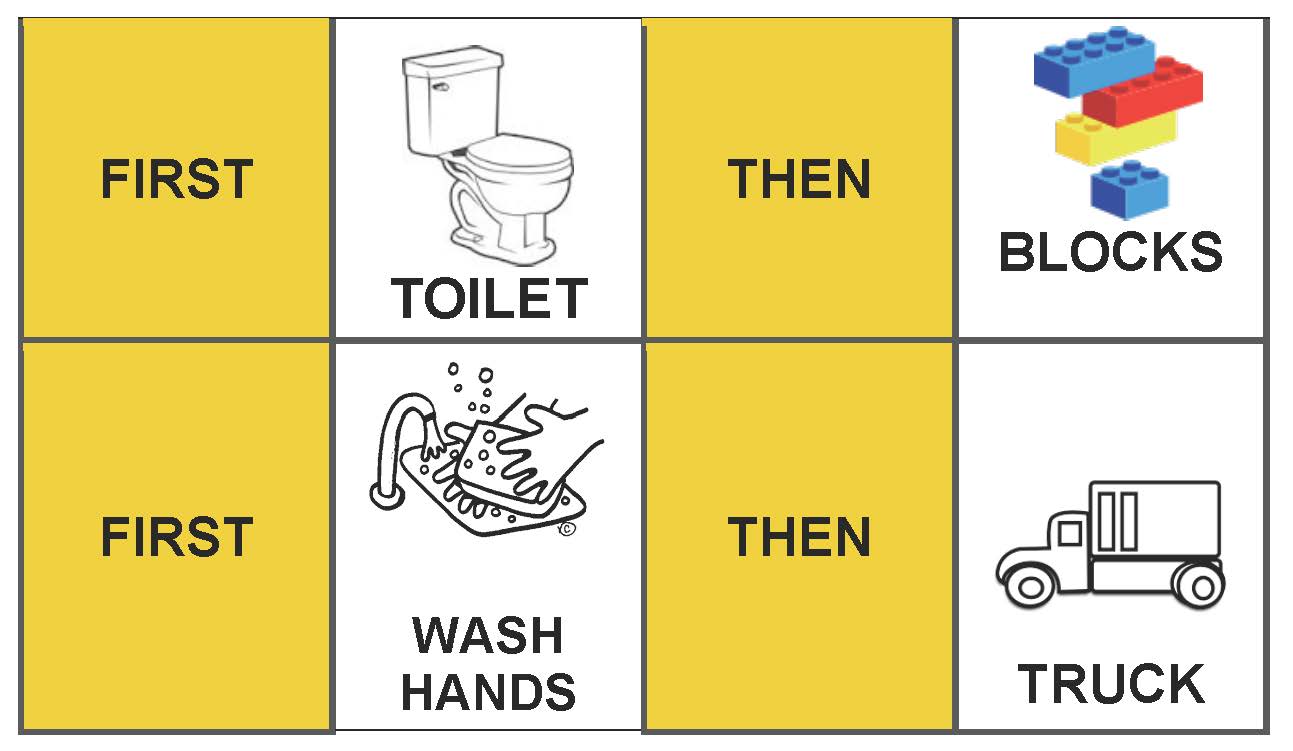
Another way to encourage participation in toileting training is to make sure that a preferred and rewarding activity follows completion of the routine. Present the picture for “toilet” followed by the activity that your child can engage in once the toileting routine is finished. For example, tell him, “First, toilet, then blocks” so he can understand and predict what comes next. Read this for more information on how to use the First —> Then technique.
This is an example of a First –> Then chart. Print out this blank chart to use at home.
-
Toilet Training Tool Kit
- Parts 1 & 2: Getting Started
- Part 3: Toilet Training Steps
- Part 4: Developing a Toileting Plan
- Part 5: Habit Training
- Part 6: Creating a Calm & Welcoming Bathroom Environment
- Part 7: Communicating with Your Child
- Part 8: Fear of New Situations
- Part 9: Using Rewards
- Part 10: Toilet Training Away From Home
- Part 11: Cooperation Between Home and School or Daycare
- Part 12: Dealing With Your Own Anxieties and Frustrations
- Parts 13 & 14: Interfering Factors
- Part 15: Diapers & Pull-Ups During Toilet Training
- Parts 16 & 17: Toilet Training Older Children
- Part 18: Success at Home But Not at School or Vice Versa
- Part 19: Use of Books, Videos & Other Visuals
- Part 20: Toilet Training at Night
- Part 21: Handling Accidents
- Part 22: Increasing Independence With Toileting
- Part 23: Using a Visual Schedule
- Parts 24 & 25: Regression & Troubleshooting
- Parts 26 & 27: References & Resources